The Revolutionary wars of 1848/49 are a very interesting subject for me. We have wars in Italy and Schleswig, as well as Hungary. And we have peoples uprising in France, Austria and Germany.
One of the "bigger" campaigns for the German wars is the uprising in Baden. The Baden army joint the Revolution. Troops of the German Bund (mostly Prussians) had to put the revolution down.
Especially for Baden, there is a book in Osprey style with German text available from Zeughaus Verlag. They also have one for the war in Schleswig.
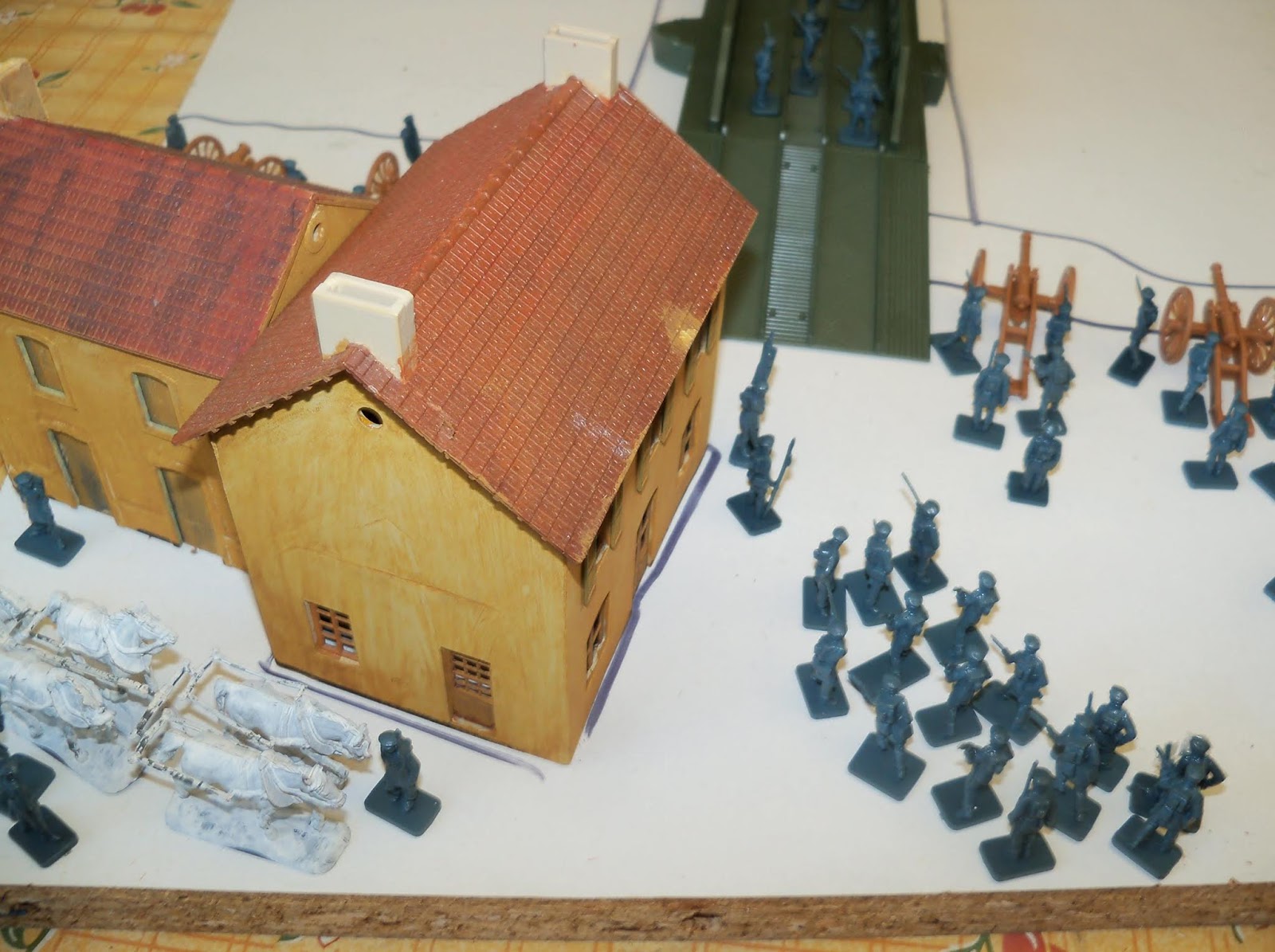
Alfred was asked to build a diorama for the museum in Ludwigshafen about the siege of the town.
He took this painting from his archive
And then he started working Dr. Alfred Frankenstein at his best again:-)
We are a group of Enthusiasts from all over the world, mostly Germany, who create historical battles in scale 1:72. As we do this since more than 10 years we thought it is time for our own blog. Being a historical enthusiast I wanted to fulfill my dream of producing my own figures in this scale too. So I started working with several sculptors to produce exotic figures in 1:72 which I fear nobody else would bring on the market.
Freitag, 6. Dezember 2019
Donnerstag, 5. Dezember 2019
Too late for the second door - French horse artillery
The last three days I spent with my friend Alfred in Lampertheim. We organized a figure exhebition there. Photos of this will be on one of the next posts..
Here as 2nd to 6th door of my Christmas Calender the next four new sets from Frank Ziegler. Available very soon in our shop. Now you can build every pose of loading and firing a gun.
Artillery a Cheval in 1800
These were very helpful illustrations to avoid the silly “artillery ballet” often criticized with figure sets. But, to be honest, I made some compromises to create these sets. There are three sets of six which each form a drill for a gun; in addition there are sets of 3 with further drills, with which the sets of 6 can be extended with changing some figures. Within these sets, of course, I also have characters that interact with each other; or poses, frozen in their free movement. There is a gunner with his bag for the cartridges running, or a gunner signaling with his hand, and I plan some wounded gunners too. Of course this does not comply with the strict drill.
Another example is the gunner kneeling down at the coffret, I must confess, he should actually standing at the limber, where the coffret were used to stand on. Unfortunately this information came a little too late. So I have modeled for a correct situation representation a pair of powderhandlers, handing over a cartridge according to regulations.
With each set there will be added some tools like spikes, sponge-rammers and buckets too.
Labels:
French Revolution,
Napoleon in Egypt,
own production
Sonntag, 1. Dezember 2019
Christmas Calender - Prussian Cuirassiers
Ok, I don't have 24 doors to open as have my children with Lego and Schleich Horse Club:-)
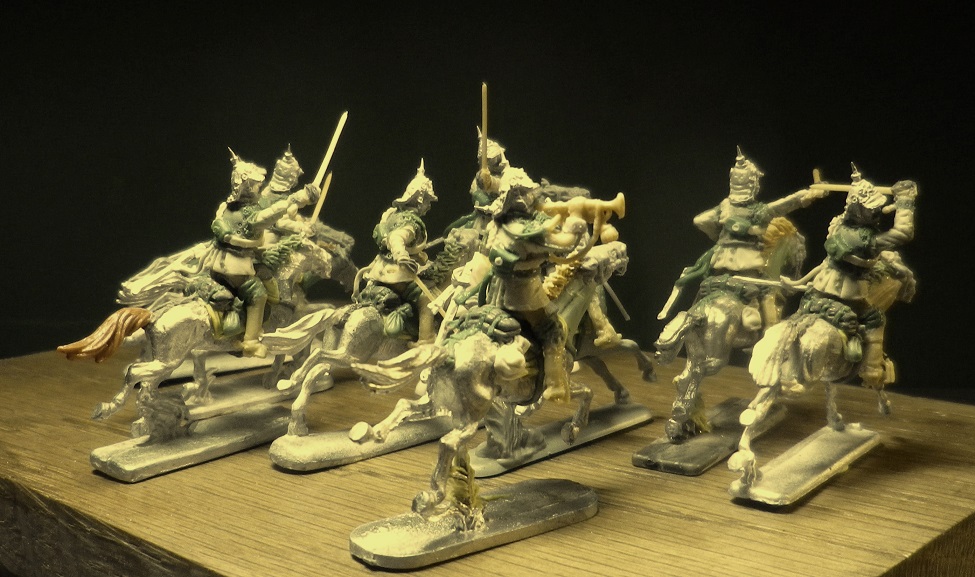
But I think on the first day I show you the latest set from Massimo. This is my own Christmas gift in advance.
In April he sculpted the first three figures as my birthday gift from Pieter. Now comes the rest. I am very happy about this. Half the Prussian charge at Mars la tour is done:-)
The French to receive them you find here:
https://www.hagen-miniatures.de/test-category-21/figures-40/franco-prussian-war-1870-71/french/
https://www.gim-figures.com/c/franzoesische-armee-1853-1870
But I think on the first day I show you the latest set from Massimo. This is my own Christmas gift in advance.
In April he sculpted the first three figures as my birthday gift from Pieter. Now comes the rest. I am very happy about this. Half the Prussian charge at Mars la tour is done:-)
The French to receive them you find here:
https://www.hagen-miniatures.de/test-category-21/figures-40/franco-prussian-war-1870-71/french/
https://www.gim-figures.com/c/franzoesische-armee-1853-1870
Freitag, 29. November 2019
Horses in 1/72
One of our Bestseller in the shop are the "naked horses". I use them for plastic figures with ugly plastic horses and also for Art-Miniaturen and old Minifigs S-Range riders which have the shabraque sculpted on the figure.
Now Frank sculpted more of them. Very nice poses and anatomical better than some Plastics.
So in a short time, we can increase this range.
Now Frank sculpted more of them. Very nice poses and anatomical better than some Plastics.
So in a short time, we can increase this range.
Dienstag, 26. November 2019
Rogers Rangers
Timo sent some photos of his conversions. Very nice ideas and a colourful spot between all these redcoats.
Samstag, 23. November 2019
Another Set of French Horse Artillery in the French revolution
One of the most popular sets in my range of the French revolution is the horse artillery made by Massimo.
You can see it here.
Now Frank told me, he wants to make another set. We already have the uniform in Dolman, now he made the one in uniformcoat. I like these guys.
And they are not only useful for Marengo:-) Here is Frank's text:
The next branch of arms for my Marengo-Range is the horse artillery. I want to introduce this new range step for step, with some aspects of the making off. So the fist chapter is the layout of the Uniform.
At Marengo, with only 18 guns, the horse artillery made up the rather little"Grand Batterie" which Marmont collected together from the remaining reserves to fight the Austrian deployment. He initiate with his battery the infantry attack of Desaix's fresh division on the northern wing. The positions of the Division of Desaix were recently reconstructed by Terry Crowdy.
https://www.napoleon-series.org/military/battles/1800/Italy/Marengo/MarengoForgottenBrigade.pdf
Accordingly, this newly assembled "Grand Battery" initiated the major attack of the infantry with a dogged artillery battle against the clearly superior Austrian artillery.
The artillery of the Consular Guard, however, was set up directly on the flank of the already fighting famous 9th Light Infantry to support their counterattack. And specially their cannonade formed the prelude for the attack of the cavalry brigade of Kellermann.
The french horse artillery formed a highly specialized elite within the French artillery forces. It was formed up at the revolutionary wars time with artillery veterans. In addition to the training like that of the foot artillery gunners - which already meant an appreciation over the infantry - they were still trained as a riding troupe, which highlighted their status as an elite force. On the other hand, there were the risks and demands of their special skilled soldiers; in many cases the losses of the horse artillery were much higher than those of others, as it was used as a mobile reserve at the foci of a battle and often had to maneuver under enemy fire.
In battle paintings, this Branch of arms is represented in most cases in the flamboyant hussar style uniform. In 1802 Lejeune paints them in his atmospheric battle painting with this uniform in order to duly highlight the branch of service. But on the other hand, he shows dramatizing the injured gunners and horses too.
https://de.wikipedia.org/wiki/Datei:Lejeune_-_Bataille_de_Marengo.jpg
But we have aquarels of Lejeune, which represent a realistic image of the campaign uniforms of the horse artillery gunners of Marengo in 1800
https://drouotstatic.zonesecure.org/images/perso/zoomsrc/LOT/67/96095/355_2.jpg
On the left there is the horse artillery gunner of the consular guard with the linstock, recognizable by the bearskin and aiguillette, on the right the horse artillery gunner of the line with a sponge rammer. The latter makes the layout for the figures, with the front view of the guardsman, with his chasseur style coat, apart from the aiguilette and bearskin, we could have a front view of the right, but if you look closely, you will see the Hussar sash underneath the chasseurs coat; a detail that I have omitted with the figurines.
Thus, I had, the layout of the uniform. A mirliton with a feather plume and a peak, a coat in chasseur style without piping on the collar and lap cuffs, the coattails with poche a la soubise, plus a double-breasted vest. In addition to the coat a charivari or pantalon boutonné cavalier with leather trim. As armament I fixed the low-hanging hussar style saber at the sword belt without sabretache, with dragonne on the simple hand guard. And further the shoulderbelt & pouch for the rider pistols.
The gunners have mustaches and around 1800 still widely used pigtail and in addition, with braids hanging from the temples or tied back, as Lejeune shows.
Analogue to the appearance to the french light infantry in this time, we can assume, that there was a certain difference in uniformity between the units of the artillery a cheval until the end of the revolutionary period.
https://www.napoleon-series.org/military/battles/1800/Italy/Marengo/MarengoForgottenBrigade.pdf
Accordingly, this newly assembled "Grand Battery" initiated the major attack of the infantry with a dogged artillery battle against the clearly superior Austrian artillery.
The artillery of the Consular Guard, however, was set up directly on the flank of the already fighting famous 9th Light Infantry to support their counterattack. And specially their cannonade formed the prelude for the attack of the cavalry brigade of Kellermann.
The french horse artillery formed a highly specialized elite within the French artillery forces. It was formed up at the revolutionary wars time with artillery veterans. In addition to the training like that of the foot artillery gunners - which already meant an appreciation over the infantry - they were still trained as a riding troupe, which highlighted their status as an elite force. On the other hand, there were the risks and demands of their special skilled soldiers; in many cases the losses of the horse artillery were much higher than those of others, as it was used as a mobile reserve at the foci of a battle and often had to maneuver under enemy fire.
In battle paintings, this Branch of arms is represented in most cases in the flamboyant hussar style uniform. In 1802 Lejeune paints them in his atmospheric battle painting with this uniform in order to duly highlight the branch of service. But on the other hand, he shows dramatizing the injured gunners and horses too.
https://de.wikipedia.org/wiki/Datei:Lejeune_-_Bataille_de_Marengo.jpg
But we have aquarels of Lejeune, which represent a realistic image of the campaign uniforms of the horse artillery gunners of Marengo in 1800
https://drouotstatic.zonesecure.org/images/perso/zoomsrc/LOT/67/96095/355_2.jpg
On the left there is the horse artillery gunner of the consular guard with the linstock, recognizable by the bearskin and aiguillette, on the right the horse artillery gunner of the line with a sponge rammer. The latter makes the layout for the figures, with the front view of the guardsman, with his chasseur style coat, apart from the aiguilette and bearskin, we could have a front view of the right, but if you look closely, you will see the Hussar sash underneath the chasseurs coat; a detail that I have omitted with the figurines.
Thus, I had, the layout of the uniform. A mirliton with a feather plume and a peak, a coat in chasseur style without piping on the collar and lap cuffs, the coattails with poche a la soubise, plus a double-breasted vest. In addition to the coat a charivari or pantalon boutonné cavalier with leather trim. As armament I fixed the low-hanging hussar style saber at the sword belt without sabretache, with dragonne on the simple hand guard. And further the shoulderbelt & pouch for the rider pistols.
The gunners have mustaches and around 1800 still widely used pigtail and in addition, with braids hanging from the temples or tied back, as Lejeune shows.
Analogue to the appearance to the french light infantry in this time, we can assume, that there was a certain difference in uniformity between the units of the artillery a cheval until the end of the revolutionary period.
Greetings
Frank
Mittwoch, 20. November 2019
Three nice flat figure dioramas
the last photos from Kulmbach. These dioramas were in the competition.
German civil war 1919
Wellington at Quatre Bras
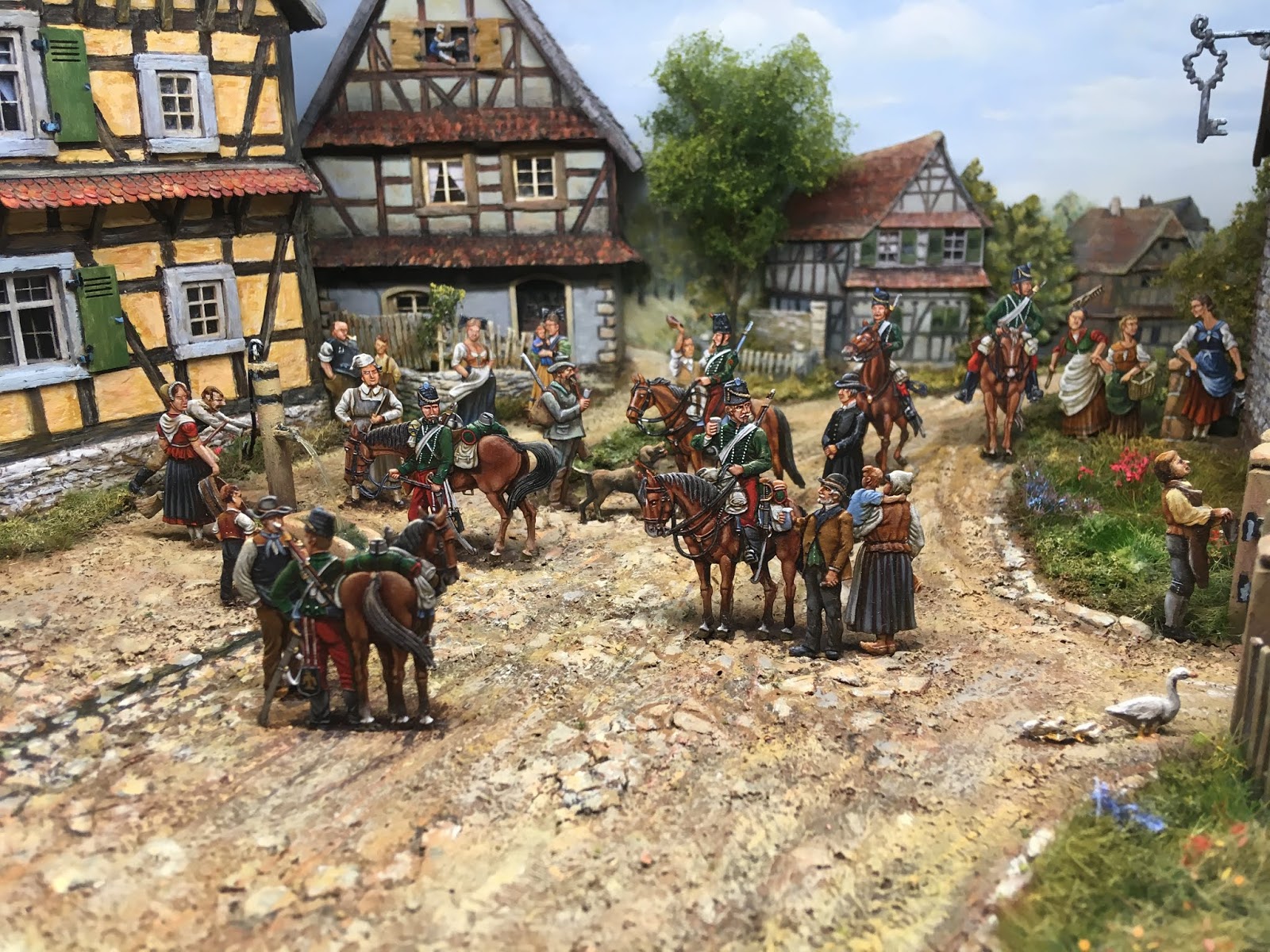
French Chasseur a Cheval in the Franco-Prussian war 1870
German civil war 1919
Wellington at Quatre Bras
French Chasseur a Cheval in the Franco-Prussian war 1870
Abonnieren
Posts (Atom)